UX & system design Software designed around the
people who use it every day.
Enterprise software should be clear and efficient for the people who spend their working day in it. GEMIS designs business systems from the work outward — research, process mapping, prototypes and interfaces — inside the company that builds them.
The situation
When the interface gets in the way of the work
A system that is hard to use gets worked around. Staff keep notes elsewhere, skip fields or phone someone instead — and the system ends up holding incomplete information. In business software, usability is an operational concern, not decoration.
Signs you may recognise
- New staff need long training before they can use the system.
- People keep side spreadsheets to do what the system should.
- Every screen shows everything to everyone, whatever their role.
- Simple tasks take many steps or screens.
How the engagement works
From the work to the interface
Each stage adds detail only once the one before has been checked with users.
-
Observe
How people actually do the work, and what they need at each step.
-
Map
Workflows and information requirements, by role.
-
Prototype
Interactive drafts put in front of users early.
-
Interface
Consistent screens and patterns, carried through to the build.
What GEMIS delivers
What design work produces
The design capabilities GEMIS brings to a business system.
-
User research
Understanding the people who use the system and the work they do.
-
Business process mapping
Workflows and hand-offs drawn out before screens are designed.
-
Interactive prototypes
Clickable drafts that users can try before anything is built.
-
Design systems
Reusable interface patterns, so every new screen is consistent with the last.
-
Enterprise dashboards
Overviews arranged around the decisions each role makes.
-
Accessibility
Contrast, keyboard use, clear labels and readable layouts considered from the start.
Evidence from real projects
Where this has been done
Projects whose recorded scope shows this work. All case studies
These case studies record design decisions. They do not include usability-testing records, so no measured results are claimed.
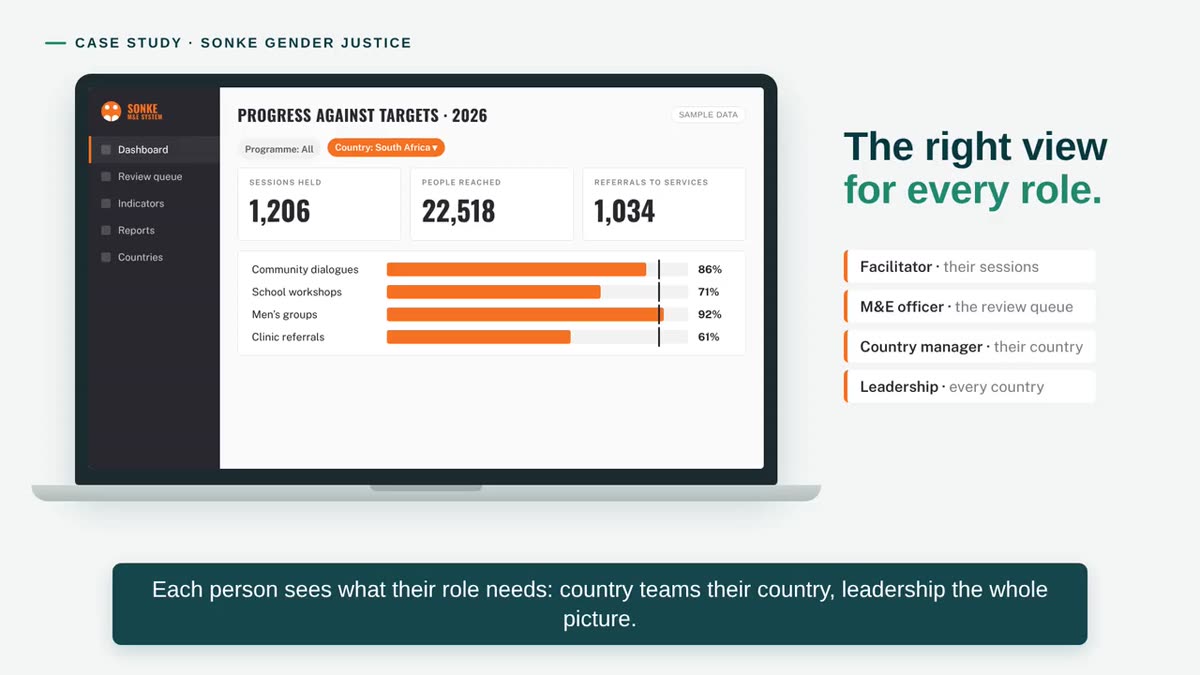
Non-profit — gender-based violence and HIV prevention
Sonke Gender Justice
Each role sees the view it needs — facilitators their sessions, country teams their country, leadership the whole picture.
Read the case study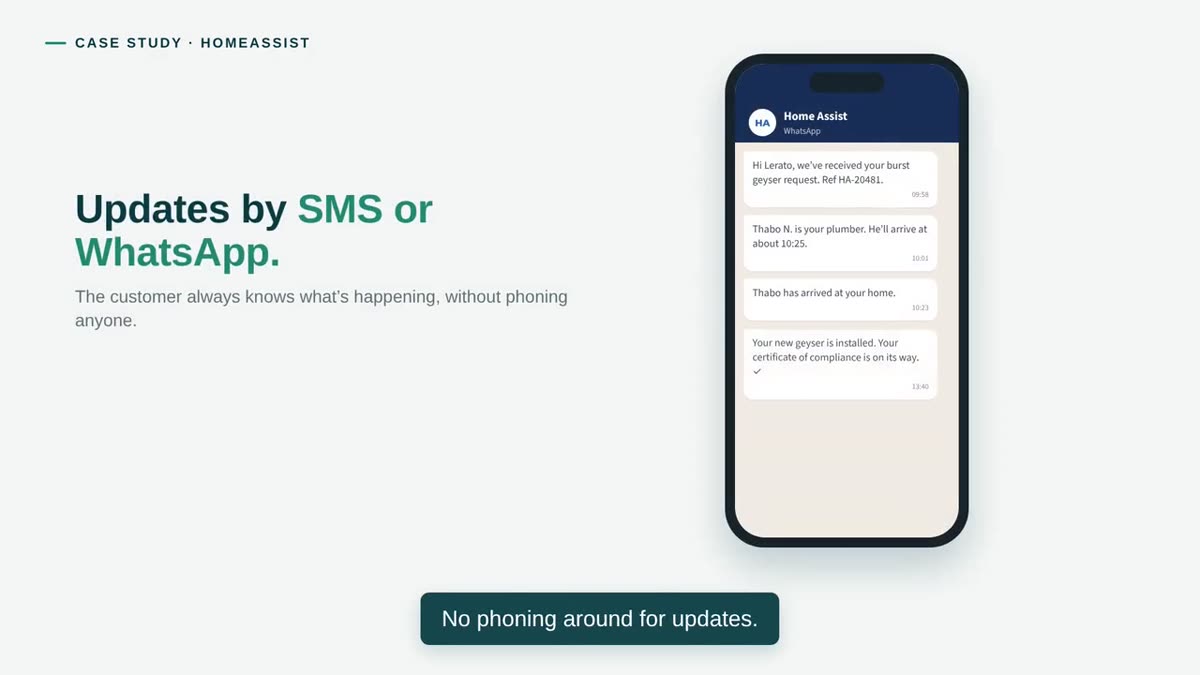
Insurance and home services — plumbing repairs
HomeAssist
Designed for three audiences at once: homeowners kept informed by SMS or WhatsApp, plumbers capturing evidence in the app, and HomeAssist seeing every job.
Read the case studyQuestions
Common questions
The questions that come up first about UX & system design. Anything not answered here is worth raising in a discovery conversation.
Why does design matter for internal software?
A system that is hard to use gets worked around, and a system that is worked around holds incomplete information. Good design decides whether the people who use the software every day put the right thing in the right place.
Will our staff be involved?
Yes. Design starts with the people who do the work: we observe how tasks are done and put prototypes in front of users early, so the design is checked against real work rather than a demonstration.
Can you redesign a system we already have?
Yes. Redesigning the interface of an existing system is one way to improve it without replacing it. We review how it is used first, so changes target the tasks that cause the most friction.
How does design work with development?
Design and development sit in the same company, so designers and developers work from the same requirements and the design is carried through to the built system.
How is this different from GEMIS Studio?
UX and system design is part of how GEMIS designs and builds business systems. GEMIS Studio is our product and interface design practice, with its own fixed-scope services. If you need design work on its own, start with the Studio.
UX & system design
Is your team working around its software?
Tell us which system it is and where people get stuck. We come back within two working days with a short written view and a time to talk.